Author: José A. Cruz
People's Weekly World Newspaper, 01/10/08 13:09
NASHUA, N.H. — As voters came out in record numbers for a presidential primary here, Jan. 8, the great majority could agree on one thing: the need for a new direction for the country, away from the Bush/Cheney policies.
Many voters said they only made up their minds about who to vote for in the last few days before the primary, and many came to the polls without having made a decision.
Shopping at a mall in southern New Hampshire before he voted, Tim Welles expressed the mood of many in the state, saying, “Things got to change in America.” President Bush has let “jobs leave the country” while using tax dollars for “a stupid war,” Welles said. His anger, he said, was in part because he had to leave school to work when the plant where his stepfather worked closed. “I want to vote for someone who is different, maybe Obama or McCain,” he said.
New Hampshire handed a much-needed but slim win to Hillary Clinton with 39 percent of the vote, over Barack Obama’s 36 percent, and John Edwards’ 17 percent. Bill Richardson got 5 percent while Dennis Kucinich got 1 percent.
Thanking her supporters, Clinton sounded an anti-corporate note, saying, “The oil companies, the drug companies, the health insurance companies, the predatory student loan companies have had seven years of a president who stands up for them. It’s time we had a president who stands up for all of you.” Clinton and Obama each won nine convention delegates and Edwards won four. The race for the Democratic nomination is now in a virtual three-way tie, with Obama at a total of 25 delegates, Clinton 23 and Edwards 19.
On the GOP side John McCain won with 37 percent of the vote, defeating “favorite son” Mitt Romney, the former governor of neighboring Massachusetts, who drew 32 percent. Mike Huckabee, who finished first in Iowa, came in third with 11 percent, Rudy Giuliani had 9 percent and Ron Paul drew 8 percent.
For workers here, jobs were a major concern.
“After the devastating impact of NAFTA on manufacturing and the middle class, this election more than ever is the most important election,” said Bill Pienta, Northeast regional director for the Steelworkers union. “There is no alternative to getting candidates speaking on the loss of millions of manufacturing jobs.”
Some 50-60 Steelworker volunteers spent the last weekend campaigning for Edwards here. Pienta credited Edwards with bringing the concerns of unions and workers into the presidential debates.
Michael Atkins and Silvia Gale reflected the varying views of voters here. Both are both board members of a local child advocacy agency. “Silvia and I believe in the same things — we just have a difference on who is the best person to lead,” Atkins, a lawyer, said as he held a Clinton sign.
Holding an Obama sign, Gale, a children’s advocate, said this year’s election is especially important because “we’re in a perilous state.” The outcome, she said, “affects our country and the globe.”
“As a life-long feminist, reproductive issues are really important to me,” Gale said. But the number one issue, in her view, is “putting an end to an unnecessary war that is robbing our upcoming generation.” Gale noted that, at her polling place, an older woman had told her, “It’s because of Barack Obama that I’m here voting. I have never voted in a primary election before.”
Born in El Salvador, Ester González, a medical assistant at a health clinic in Nashua, said her main concern is immigration reform. “I’m going to pick someone who is going to fix the status of people who don’t have any papers,” as a way to start “fixing” what’s wrong in the world, she said as she walked into her polling place with her husband and toddler son.
In Manchester, Margarita Jamie said she and her husband David were concerned about issues relating to working people. “We’ve been slammed in getting help from the government,” she said emphatically. “It’s important for me to get my vote in because it’s important for that to get taken care of and also health care is a big issue for me, too.” Jamie said health insurance costs have “gone skyrocket high and they should make it more affordable, especially for the middle-class people that are trying to make ends meet.”
On a record-breaking warm day, a record-breaking 453,000 voters turned out for the primary. In some places, poll workers had to make photocopies of ballots in order to have enough. Some precincts reported having to swear in poll workers as deputy registrars to handle the influx of voters registering for the first time on primary day. New Hampshire is one of a few states that allow same-day registration.
Susan Webb contributed to this article.
I found this info. at http://www.pww.org/article/articleview/12296/1/405
Showing posts with label democrat. Show all posts
Showing posts with label democrat. Show all posts
Thursday, January 10, 2008

Youth Vote Soars In N.H. Primary
This story was written by Allie Lowe, The DartmouthYouth voters came out for this year's New Hampshire primary in dramatically higher numbers than in past contests, as 53,000 more voters under the age of 30 headed to the polls than in 2004 . On Tuesday, the youth vote revived Sen. John McCain's, R-Ariz., ailing campaign and helped Sen. Barack Obama, D-Ill., secure a close second-place finish.
Forty-three percent of eligible New Hampshire voters under age 30 participated in Tuesday's vote, a dramatic increase from the 18 and 28 percent participation rates in the 2004 and 2000 primaries, according to a report by The Center for Information and Research on Civic Learning and Engagement, a nonpartisan research center that studies youth civic engagement.
Obama received 60 percent of the 18 to 24-year old vote in the state, while Clinton received 22 percent of this demographic. Among voters aged 25 to 29, Clinton narrowly beat out Obama, gaining 27 percent of the vote to Obama's 25 percent.
Clinton was dominant among older voters, gaining the highest share in every category of voters over age 40, including 48 percent among voters 65 and older. Obama received 32 percent of the votes from this group.
On the Republican side, McCain won the youth vote, earning 27 percent of the 18 to 24-year old vote and besting Rep. Ron Paul, R-Texas, who gained the next highest share with 19 percent. McCain garnered the highest percentage of votes among every age division except those voters 65 and older, a group that tended to vote in favor of former Gov. Mitt Romney, R-Mass.
The stark contrast between statewide outcomes and the results according to exit polls in Hanover and Durham County, which is home to the University of New Hampshire, have revealed the importance of the youth vote to Obama's campaign. In comparison to his 36.4 percent tally in the state as a whole, which left him just short of Clinton's 39 percent, Obama garnered 48 percent of the vote in Durham, besting Clinton's 30 percent.
In Hanover, where Dartmouth students comprise of approximately half the population, this difference was even more striking, as Obama gained 58 percent of the vote to Clinton's 26 percent.
An exit poll conducted by The Dartmouth that surveyed 351 voters leaving the Hanover polls indicates that the war in Iraq and health care were among the issues most important to Hanover voters. The exit polls measured votes to within three percent of official results,
Obama's support among students was critical in eliminating Clinton's previous commanding lead in the state, Dartmouth government professor Dean Lacy said.
"Student voters played an incredibly strong role for Senator Obama," Lacy said. "He made up a 15 point deficit in the polls as of just a few weeks ago."
Dartmouth government professor Linda Fowler, while noting that she had not yet examined exit poll data, said the early date for this year's primary may have deterred a number of potential student voters. Most students have not yet returned to UNH, which will commence its spring semester classes on Jan. 22.
Fowler also pointed out that the lack of time allowed for registration efforts may have affected turnout among students. In past years a later primary date allowed registration efforts to take place several days before the vote, but this year, many students were forced to register on the day of the primaries, which caused long lines at the Hanover polls.
"Maybe it wasn't the difference between a win and a loss, but it would have probably put [Obama] closer," Fowler said.
McCain's support among younger voters, Lacy said, likely came as a surprise to Paul's campaign, which had been banking on securing a large percentage of the student vote.
"On the Republican side, I think more younger Republicans look to [McCain] as a long-time party leader who is also abit of an independent," Lacy said. "Ron Paul's message just hasn't caught on with younger Republicans as much as the Paul campaign had hoped."
Jennifer Bandy '09, vice president of the Dartmouth College Republicans, said McCain's popularity among Dartmouth voters may have been correlated to McCain's multiple visits to Dartmouth's campus, which she called "emblematic" of his efforts to court New Hampshire's overall youth vote.
"I'm not surprised. He made the effort to come by twice," Bandy said, pointing to McCain's most recent visit on Monday. "We haven't had visits from other candidates as recently."
McCain's support among young voters represents a departure from a Republican party that has struggled to court young voters in the wake of the current administration, Fowler said.
"McCain's support among young people was kind of an anomaly - but then again he's not a typical Republican candidate." Fowler said, adding that McCain is a more conservative candidate than some voters may realize.
Tuesday's high youth voter turnout mirrors youth voter increases in Iowa, where participation in the caucuses rose from 4 percent in 2004 to 18 percent in this year's contest. In 2000, Iowa saw only two percent of youth participation in its caucuses, CIRCLE reported.
"The broader story here is the huge increase in the youth vote in general," Mike Heslin '08, president of the New Hampshire College Democrats, said.
There has been controversy over the role of student voters in both Iowa and New Hampshire in recent years.
In 2006, New Hampshire legislation that would have made it far more difficult for students to establish domicile in the state, was vetoed by Gov. John Lynch, D-N.H., after lobbying by Dartmouth students.
In April 2007, the New Hampshire Senate passed two bills that solidified students' right to vote in the state after establishing domicile.
At Dartmouth, Heslin pointed to the efforts of both campaigns and student groups as major contributors to Tuesday's high youth turnout.
"And the students themselves can't go overlooked," Heslin said. "When it comes down to it they were the ones who had to go to the polls and cast those votes."
I found this at http://www.cbsnews.com/stories/2008/01/10/politics/uwire/main3698115.shtml
Forty-three percent of eligible New Hampshire voters under age 30 participated in Tuesday's vote, a dramatic increase from the 18 and 28 percent participation rates in the 2004 and 2000 primaries, according to a report by The Center for Information and Research on Civic Learning and Engagement, a nonpartisan research center that studies youth civic engagement.
Obama received 60 percent of the 18 to 24-year old vote in the state, while Clinton received 22 percent of this demographic. Among voters aged 25 to 29, Clinton narrowly beat out Obama, gaining 27 percent of the vote to Obama's 25 percent.
Clinton was dominant among older voters, gaining the highest share in every category of voters over age 40, including 48 percent among voters 65 and older. Obama received 32 percent of the votes from this group.
On the Republican side, McCain won the youth vote, earning 27 percent of the 18 to 24-year old vote and besting Rep. Ron Paul, R-Texas, who gained the next highest share with 19 percent. McCain garnered the highest percentage of votes among every age division except those voters 65 and older, a group that tended to vote in favor of former Gov. Mitt Romney, R-Mass.
The stark contrast between statewide outcomes and the results according to exit polls in Hanover and Durham County, which is home to the University of New Hampshire, have revealed the importance of the youth vote to Obama's campaign. In comparison to his 36.4 percent tally in the state as a whole, which left him just short of Clinton's 39 percent, Obama garnered 48 percent of the vote in Durham, besting Clinton's 30 percent.
In Hanover, where Dartmouth students comprise of approximately half the population, this difference was even more striking, as Obama gained 58 percent of the vote to Clinton's 26 percent.
An exit poll conducted by The Dartmouth that surveyed 351 voters leaving the Hanover polls indicates that the war in Iraq and health care were among the issues most important to Hanover voters. The exit polls measured votes to within three percent of official results,
Obama's support among students was critical in eliminating Clinton's previous commanding lead in the state, Dartmouth government professor Dean Lacy said.
"Student voters played an incredibly strong role for Senator Obama," Lacy said. "He made up a 15 point deficit in the polls as of just a few weeks ago."
Dartmouth government professor Linda Fowler, while noting that she had not yet examined exit poll data, said the early date for this year's primary may have deterred a number of potential student voters. Most students have not yet returned to UNH, which will commence its spring semester classes on Jan. 22.
Fowler also pointed out that the lack of time allowed for registration efforts may have affected turnout among students. In past years a later primary date allowed registration efforts to take place several days before the vote, but this year, many students were forced to register on the day of the primaries, which caused long lines at the Hanover polls.
"Maybe it wasn't the difference between a win and a loss, but it would have probably put [Obama] closer," Fowler said.
McCain's support among younger voters, Lacy said, likely came as a surprise to Paul's campaign, which had been banking on securing a large percentage of the student vote.
"On the Republican side, I think more younger Republicans look to [McCain] as a long-time party leader who is also abit of an independent," Lacy said. "Ron Paul's message just hasn't caught on with younger Republicans as much as the Paul campaign had hoped."
Jennifer Bandy '09, vice president of the Dartmouth College Republicans, said McCain's popularity among Dartmouth voters may have been correlated to McCain's multiple visits to Dartmouth's campus, which she called "emblematic" of his efforts to court New Hampshire's overall youth vote.
"I'm not surprised. He made the effort to come by twice," Bandy said, pointing to McCain's most recent visit on Monday. "We haven't had visits from other candidates as recently."
McCain's support among young voters represents a departure from a Republican party that has struggled to court young voters in the wake of the current administration, Fowler said.
"McCain's support among young people was kind of an anomaly - but then again he's not a typical Republican candidate." Fowler said, adding that McCain is a more conservative candidate than some voters may realize.
Tuesday's high youth voter turnout mirrors youth voter increases in Iowa, where participation in the caucuses rose from 4 percent in 2004 to 18 percent in this year's contest. In 2000, Iowa saw only two percent of youth participation in its caucuses, CIRCLE reported.
"The broader story here is the huge increase in the youth vote in general," Mike Heslin '08, president of the New Hampshire College Democrats, said.
There has been controversy over the role of student voters in both Iowa and New Hampshire in recent years.
In 2006, New Hampshire legislation that would have made it far more difficult for students to establish domicile in the state, was vetoed by Gov. John Lynch, D-N.H., after lobbying by Dartmouth students.
In April 2007, the New Hampshire Senate passed two bills that solidified students' right to vote in the state after establishing domicile.
At Dartmouth, Heslin pointed to the efforts of both campaigns and student groups as major contributors to Tuesday's high youth turnout.
"And the students themselves can't go overlooked," Heslin said. "When it comes down to it they were the ones who had to go to the polls and cast those votes."
I found this at http://www.cbsnews.com/stories/2008/01/10/politics/uwire/main3698115.shtml
Monday, December 31, 2007
Antiwar America Unite!

by peacecandidates.com (Posted by Nadia) Page 1 of 1 page(s)
http://www.opednews.com
Antiwar America Unite!
impeach_pollIf 80% of America wants to End the War & Impeach Bush, why can't we accomplish our goals?
We have been unsuccessful thus far because we are not united. And why is that? Because many of the anti-war 'leaders' are actually government plants operating in the cointelpro tradition of infiltrate, disrupt and discredit.
Does that sound outlandish to you? Do you still think we're a free country and our government would never use fascist tactics like that? Well it's true.
* Police spies chosen to lead war protest
* Police Infiltrate Protest Groups, Incite Violence
* Pentagon spying on Peace Groups & Quakers
These are not isolated incidents, but a nationwide pattern.
In my little hometown, the anti-war leaders love to march on the beach, or stand in silence with their little signs, but if one suggests we take the truth to the local public radio station, ask for a community dialogue about the war and reasons for impeachment- they are 100% opposed to the idea. Not only were they against it, they did everything in their power to prevent a community discussion- just sign these petitions and go home.
It turns out many antiwar websites are also run by the same type of cointelpro goons. Their goal is not to end the war, but to distract and stall the antiwar movement. These 'fake antiwar' websites refuse to post articles with concrete actions citizens can take to reclaim the country, but they will post just about anything and everything else to keep you busy reading, because that's harmless.
This is why the war continues, because we are divided by cointelpro agents locally and cointelpro websites nationally.
To end the war, antiwar Americans need to wake up to these cointelpro tactics and UNITE. It's not about democrat vs republican- that is just more of the same divide and conquer strategy. Most of America wants the war to end, but do they realize that voting 20 more democrats into Congress this fall will accomplish nothing. Look at Pelosi and Reid- they are not alone as Bush enablers, they were voted to 'lead' by the majority of Dems, ie if we had real Dems in DC, they would have booted Pelosi and Reid a long time ago.
To get real change we need to flush the House, we need to get rid of all the career politicians and put fresh faces in DC. We need to organize true Peace Candidates in every state.
This is a real plan, something actionable that every American can participate in- the goal being to recruit and organize regular Americans to run for Congress.
Sure we can't beat the big money candidates one on one, but if we all unite under a common platform of End the War and Restore the Constitution- then yes we could win.
The goal is to End the War and Take Back America from the corporations- who is truly on our side?
ps- for all you Ron Paul and Dennis Kucinich backers- consider this plan B. Recall 2004, the antiwar movement was behind Howard Dean, when he collapsed so did the movement. We need a people's movement that cannot be crushed by the failure of our candidate(s).
I found this at http://www.opednews.com/articles/genera_peacecan_071231_antiwar_america_unit.htm
Thursday, December 6, 2007
NAIS, New law could make animal id required
By Alexis Hunt
Posted: Thursday, December 06, 2007 at 5:50 p.m.
The U-S Department of Agriculture wants to pass a law that'll affect farmers in the Tri-States as well as across the country. The U-S-D-A has designed a National Animal Identification System or N-A-I-S. This system requires all livestock get registered by placing a plastic tag in their ear. That tag has an electronic number that gets scanned through a computer when the animal goes through a livestock auction. The U-S-D-A says this process is for disease traceback, but members of R-Calf and the Missouri Farmer's Union beg to differ. They met today to discuss these issues.
"We're not against the technology at all...the reason we're against this is the government is intending to make this mandatory. Also there's a significant cost...and there's no program to assist us in that cost," said President of R-Calf Max Thornsberry.
The law won't take effect until 2010. When it takes affect, it will be a federal offense to remove the id.
Posted: Thursday, December 06, 2007 at 5:50 p.m.
The U-S Department of Agriculture wants to pass a law that'll affect farmers in the Tri-States as well as across the country. The U-S-D-A has designed a National Animal Identification System or N-A-I-S. This system requires all livestock get registered by placing a plastic tag in their ear. That tag has an electronic number that gets scanned through a computer when the animal goes through a livestock auction. The U-S-D-A says this process is for disease traceback, but members of R-Calf and the Missouri Farmer's Union beg to differ. They met today to discuss these issues.
"We're not against the technology at all...the reason we're against this is the government is intending to make this mandatory. Also there's a significant cost...and there's no program to assist us in that cost," said President of R-Calf Max Thornsberry.
The law won't take effect until 2010. When it takes affect, it will be a federal offense to remove the id.
Wednesday, December 5, 2007
Which Democrat's Health Plan
By LAURA MECKLER
December 5, 2007; Page A8
While the leading Democratic presidential candidates agree on most policy issues, a sharp dispute has emerged: Who would do more to provide health coverage for the uninsured?
Sens. Hillary Clinton and Barack Obama have been engaged in a bitter back-and-forth over whose health plan covers more people. Former Sen. John Edwards has jumped in, saying his plan is the best of all.
• The Players: Hillary Clinton, Barack Obama and John Edwards all claim to have universal health-care proposals.
• The Background: Clinton and Edwards, but not Obama, would require all Americans to have insurance.
• The Bottom Line: Mandates may be needed to get everyone insured, but it's unclear if these plans provide enough subsidies to make the mandates affordable.
The argument concerns whether the government should require all Americans to get insurance. Mrs. Clinton and Mr. Edwards would require people to get insurance, either through work, a government program or new health marketplaces that all three candidates promise to set up. Mr. Obama would only require that children be insured.
Other elements of their plans are similar, including subsidies to help lower-income and even middle-income families pay premiums, and various proposals to cut the cost of health care. The candidates say they would pay for their plans by rolling back President Bush's tax cuts for upper-income earners and by savings in health spending through various measures.
None of the Republican candidates has proposed a universal health plan. But with the race tight and health care the No. 1 domestic issue for Democrats, the differences among Democrats have become a point of continuing tension.
Mrs. Clinton charges that Mr. Obama's plan would leave 15 million people without insurance. Outside experts agree that number is in the ballpark. If people aren't required by law to buy insurance, many won't. There are millions of children, for instance, who remain uninsured, even though they qualify for free or subsidized government programs.
In addition, all three candidates want to bar insurance companies from rejecting sick people or charging them more. But it is hard to require companies to insure expensive sick people if they aren't guaranteed that cheap healthy people will balance them out.
On the campaign trail, Mrs. Clinton has attacked Mr. Obama for his plan, saying it betrays the Democratic principle of universal coverage. Her campaign has demanded that he take down an advertisement that claims his plan "covers everyone."
Mr. Obama has replied that her attacks are more about politics than substance; they didn't come, he noted, until she lost ground in the polls. But his advisers don't dispute her central charge. Rather, they claim Mrs. Clinton's plan would also leave millions without coverage.
Obama adviser Austan Goolsbee argues that if Mrs. Clinton's health plan is enacted, she will have to waive the mandate for millions of people. That is because, he says, there isn't enough money for subsidies to make health insurance affordable enough for people to buy it.
"You can't put in a mandate until health care is affordable," he says. He predicted that a Hillary Clinton administration would wind up exempting 20% of the uninsured, or about 10 million people. That is the percentage of uninsured adults who were exempted in Massachusetts, the only state to try an individual mandate.
That view may not be true. Ken Thorpe, a health-policy expert at Emory University who has advised all three major Democrats, said he ran cost estimates for the Clinton plan at the Clinton campaign's request, and found there should be enough money to make insurance affordable for all. He said he ran three scenarios with varying levels of subsidies -- from $100 billion a year to $120 billion a year. The campaign chose one in the middle: $110 billion.
If it turns out that isn't enough money to make health premiums affordable, Mrs. Clinton would have to spend more on subsidies, one of her health-care advisers said.
But, the adviser said, it is wrong to assume that 20% of Americans will be exempted. It is impossible to say for certain, because the campaign has not explained how large the subsidies will be or who will qualify for them.
The Obama plan does some other things to get people insurance. It allows adults up to age 25 to stay on their parents' insurance even if they aren't in school. And it attempts to lower the cost of insurance overall through a reinsurance plan, whereby the federal government would cover some expenses of some of the most costly patients.
Outside experts note that the Clinton and Obama plans propose spending about the same amount of money, while Mr. Obama uses some of his to pay for the reinsurance plan -- an initiative that could cost tens of billions of dollars. That should help lower premiums across the board, but it means there would be less available for direct subsidies.
Amid the Clinton-Obama dispute, Mr. Edwards, who was the first to propose a universal coverage plan, has tried to jump into the debate. He notes that he has been much more specific than Mrs. Clinton has about how he will enforce the mandate. Indeed, Mrs. Clinton has suggested some options but has not made as clear a statement about enforcement.
Under the Edwards plan, people will have to prove their have insurance when they file their taxes, and the government will seek to collect back premiums, with interest, for those who refuse to get it.
None of the candidates want to talk about the fact that even if their plans worked out exactly as designed, none would cover all 47 million uninsured people in the U.S. That's because several million of the uninsured -- estimates put it up to seven million -- are illegal immigrants, and none of the front-runners include them in their programs.
Write to Laura Meckler at laura.meckler@wsj.com
December 5, 2007; Page A8
While the leading Democratic presidential candidates agree on most policy issues, a sharp dispute has emerged: Who would do more to provide health coverage for the uninsured?
Sens. Hillary Clinton and Barack Obama have been engaged in a bitter back-and-forth over whose health plan covers more people. Former Sen. John Edwards has jumped in, saying his plan is the best of all.
• The Players: Hillary Clinton, Barack Obama and John Edwards all claim to have universal health-care proposals.
• The Background: Clinton and Edwards, but not Obama, would require all Americans to have insurance.
• The Bottom Line: Mandates may be needed to get everyone insured, but it's unclear if these plans provide enough subsidies to make the mandates affordable.
The argument concerns whether the government should require all Americans to get insurance. Mrs. Clinton and Mr. Edwards would require people to get insurance, either through work, a government program or new health marketplaces that all three candidates promise to set up. Mr. Obama would only require that children be insured.
Other elements of their plans are similar, including subsidies to help lower-income and even middle-income families pay premiums, and various proposals to cut the cost of health care. The candidates say they would pay for their plans by rolling back President Bush's tax cuts for upper-income earners and by savings in health spending through various measures.
None of the Republican candidates has proposed a universal health plan. But with the race tight and health care the No. 1 domestic issue for Democrats, the differences among Democrats have become a point of continuing tension.
Mrs. Clinton charges that Mr. Obama's plan would leave 15 million people without insurance. Outside experts agree that number is in the ballpark. If people aren't required by law to buy insurance, many won't. There are millions of children, for instance, who remain uninsured, even though they qualify for free or subsidized government programs.
In addition, all three candidates want to bar insurance companies from rejecting sick people or charging them more. But it is hard to require companies to insure expensive sick people if they aren't guaranteed that cheap healthy people will balance them out.
On the campaign trail, Mrs. Clinton has attacked Mr. Obama for his plan, saying it betrays the Democratic principle of universal coverage. Her campaign has demanded that he take down an advertisement that claims his plan "covers everyone."
Mr. Obama has replied that her attacks are more about politics than substance; they didn't come, he noted, until she lost ground in the polls. But his advisers don't dispute her central charge. Rather, they claim Mrs. Clinton's plan would also leave millions without coverage.
Obama adviser Austan Goolsbee argues that if Mrs. Clinton's health plan is enacted, she will have to waive the mandate for millions of people. That is because, he says, there isn't enough money for subsidies to make health insurance affordable enough for people to buy it.
"You can't put in a mandate until health care is affordable," he says. He predicted that a Hillary Clinton administration would wind up exempting 20% of the uninsured, or about 10 million people. That is the percentage of uninsured adults who were exempted in Massachusetts, the only state to try an individual mandate.
That view may not be true. Ken Thorpe, a health-policy expert at Emory University who has advised all three major Democrats, said he ran cost estimates for the Clinton plan at the Clinton campaign's request, and found there should be enough money to make insurance affordable for all. He said he ran three scenarios with varying levels of subsidies -- from $100 billion a year to $120 billion a year. The campaign chose one in the middle: $110 billion.
If it turns out that isn't enough money to make health premiums affordable, Mrs. Clinton would have to spend more on subsidies, one of her health-care advisers said.
But, the adviser said, it is wrong to assume that 20% of Americans will be exempted. It is impossible to say for certain, because the campaign has not explained how large the subsidies will be or who will qualify for them.
The Obama plan does some other things to get people insurance. It allows adults up to age 25 to stay on their parents' insurance even if they aren't in school. And it attempts to lower the cost of insurance overall through a reinsurance plan, whereby the federal government would cover some expenses of some of the most costly patients.
Outside experts note that the Clinton and Obama plans propose spending about the same amount of money, while Mr. Obama uses some of his to pay for the reinsurance plan -- an initiative that could cost tens of billions of dollars. That should help lower premiums across the board, but it means there would be less available for direct subsidies.
Amid the Clinton-Obama dispute, Mr. Edwards, who was the first to propose a universal coverage plan, has tried to jump into the debate. He notes that he has been much more specific than Mrs. Clinton has about how he will enforce the mandate. Indeed, Mrs. Clinton has suggested some options but has not made as clear a statement about enforcement.
Under the Edwards plan, people will have to prove their have insurance when they file their taxes, and the government will seek to collect back premiums, with interest, for those who refuse to get it.
None of the candidates want to talk about the fact that even if their plans worked out exactly as designed, none would cover all 47 million uninsured people in the U.S. That's because several million of the uninsured -- estimates put it up to seven million -- are illegal immigrants, and none of the front-runners include them in their programs.
Write to Laura Meckler at laura.meckler@wsj.com
Sunday, December 2, 2007
A Plan to Cut Antiterror Spending Is Criticized by State’s Leaders

A White House plan to slash antiterror grant programs by more than half would threaten the safety of American cities, New York politicians charged yesterday.
Skip to next paragraph
Senator Charles E. Schumer blasted the Bush administration’s plan to eliminate some port and rail security programs and cut security grants for states and cities to $1.4 billion in 2009 from $3.4 billion in the 2007 fiscal year.
“To say, no port security, no transit security, when we know that our ports and transit lines are targets for terrorists makes no sense if you want to protect America,” Mr. Schumer said.
Other officials said the cuts would penalize a city attacked by terrorists on Sept. 11, 2001, and in 1993.
“It’s stunning that the federal government would consider cutting New York City’s homeland security funds from the already inadequate level that currently exists,” said John Gallagher, a spokesman for Mayor Michael R. Bloomberg.
The federal government has given $23 billion in antiterror grants to states and municipalities since the Sept. 11 attacks, but some have criticized the programs as pork-barrel spending.
According to budget documents obtained by The Associated Press, the Bush administration is not convinced that the money has been well spent and thinks the nation’s highest-risk cities have largely satisfied their emergency need to improve security.
Officials with the White House Office of Management and Budget said the president’s budget proposals had yet to be completed. Russ Knocke, a spokesman for the Department of Homeland Security, said Friday that the White House would strongly support any needed antiterror programs.
Still, Gov. Eliot Spitzer’s spokeswoman, Christine Anderson, likened the White House proposal to a “‘bean counter’ approach to protecting our homeland when sound policy is what’s required.”
Mr. Schumer estimated that if the cuts were accepted by Congress, New York City’s share of the aid might drop to $70 million or $80 million from $134 million.
Huckabee’s Leap in Iowa Poll Reverberates

DES MOINES – The big news in presidential politics this Sunday is the pole vault of Mike Huckabee into first place in the new Des Moines Register poll of likely Iowa Republican caucus-goers, who had appeared to favor the better-known, better-financed Mitt Romney for much of this year.
The poll found Mr. Huckabee, a former governor of Arkansas, winning 29 percent of the support from Republicans who definitely or probably plan to vote in the Jan. 3 caucuses – an increase of 17 points since the last poll in early October. Mr. Romney, the former Massachusetts governor, fell to second place with 24 percent of the vote, while former Mayor Rudolph W. Giuliani came in third with 13 percent.
On the Democratic side, Senator Barack Obama of Illinois showed continued strength against Senator Hillary Rodham Clinton of New York, polling in a statistical dead heat that also includes former Senator John Edwards of North Carolina.
The poll of 500 Republicans and 500 Democrats, conducted in late November, had a margin of sampling error of plus or minus 4.4 percentage points. Iowa goes first among all the states in the presidential nominating process of caucuses and primaries, followed by New Hampshire, Nevada, and South Carolina.
In the last Register poll, in early October, Mrs. Clinton led Mr. Edwards and Mr. Obama, 29-23-22 percent respectively.
Since then Mrs. Clinton has faced a barrage of criticism from the two men – particularly from Mr. Edwards – over her positions on Iran, Social Security reform, and her candor and electability. She has only recently begun returning fire in kind, though so far it has been mostly aimed at Mr. Obama and the fact that his health insurance proposal does not guarantee universal coverage because it does not require people to obtain insurance.
Among the most interesting findings in the poll, Mr. Obama also overtook Mrs. Clinton in her core demographic – female voters. He had support from 31 percent of women likely to attend the caucuses, compared to 26 percent for Mrs. Clinton. In the October poll, Mrs. Clinton had 34 percent to Mr. Obama’s 21 percent.
The poll also found Mr. Huckabee leading Mr. Romney among men, born-again Christians, and middle-aged voters, and running about even among women and older voters. Mr. Romney did better with younger Republicans,
Three other Republican candidates – Fred Thompson, John McCain, and Ron Paul – were all in the single digits in the new poll.
Huckabee on Aid for Illegals
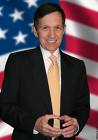
Republican presidential candidate Mike Huckabee, the former Arkansas governor who backed in-state tuition for the children of illegal immigrants, hedged Sunday on whether illegal immigrants who have gone to school in the United States should become eligible for federal student aid such as Pell grants and subsidized federal student loans.
"I'm not sure that I would support that," Huckabee told ABC News, "it was a different program in Arkansas."
Huckabee's failure to take a clear position on federal student aid while appearing on ABC News' "This Week with George Stephanopoulos" drew swift rebukes from two Republican rivals.
"Gov. Romney does not support providing federal taxpayer-funded student aid intended for legal residents going to illegal immigrants," Romney spokesman Kevin Madden told ABC News. "Mike Huckabee's position [in Arkansas] that taxpayer dollars meant for students who are legal residents should also be made available to illegal immigrants puts him squarely at odds with the American taxpayer."
Echoing a line that Romney used against Huckabee in last week's CNN/YouTube debate, Madden added, "Mike Huckabee needs to understand that it's not his money. It's the taxpayers' money."
Huckabee's indecision on federal student aid was also criticized by the campaign of former Tennessee Sen. Fred Thompson.
"Children who are born in this country are U.S. citizens and entitled to the privileges of citizenship," said Thompson spokeswoman Karen Hanretty. "Those in our country illegally are not. It's that simple."
Huckabee appeared on "This Week" on the same day that a highly respected poll showed him as the new Republican leader in Iowa.
Huckabee leads the GOP field with 29 percent support, according to a Des Moines Register poll released Sunday. Romney has 24 percent, former New York Mayor Rudy Giuliani has 13 percent, and Thompson has 9 percent. The Iowa Republican Caucuses take place on Jan. 3.
In-state tuition for illegal immigrants was never enacted in Arkansas. But Huckabee's rivals believe that his momentum in Iowa can be stopped once his views on public benefits for the children of illegal immigrants become more widely known.
Asked on "This Week" about his Arkansas record, the former Baptist minister said, "You don't punish a child because a parent committed a crime, or committed a sin, you just don't do it."
Huckabee did not rule out that his principle might extend to the federal level.
He suggested, however, that he might view state and federal benefit questions differently.
"It's the difference between being punished and being rewarded," said Huckabee. ". . . the point in Arkansas was, we had kids who had been in our schools, by law. And to simply shut them out of any additional educational advancement, to me, seemed not only in their worst interests, but ours, as well as the state's
Huckabee "I drink a different kind of Jesus juice,"

LITTLE ROCK, ARK. -- In 2005, a Republican state senator named Jim Holt introduced a bill to deny public benefits to Arkansas' soaring population of illegal immigrants. Holt, a Southern Baptist minister, figured it was a rock-solid conservative idea -- a matter, he said, "of right and wrong."
Arkansas' governor at the time was also a professed conservative, and also a Southern Baptist minister. But Mike Huckabee had only scorn for his fellow Republican's proposal.
Huckabee called the bill "race-baiting" and "demagoguery," and argued that the denial of health services could harm innocent children. The bill, Huckabee said, did not conform with his take on Christian values.
"I drink a different kind of Jesus juice," Huckabee said.
Today, Huckabee is seeking the Republican nomination for president, and voters nationwide are getting to know a different kind of candidate: He is the Southern preacher who favors droll wit over brimstone sermonizing, a rock 'n' roll bass player who believes in creationism, with an Oprah-ready story about a 110-pound weight loss that probably saved his life.
Here in Arkansas, where Huckabee ruled as governor for 10 1/2 years, voters grew accustomed to a different brand of Republican -- a governor with an idiosyncratic agenda that was sometimes difficult to categorize, but always driven, Huckabee insists, by his Southern Baptist faith. That faith influenced major policy decisions that could be deemed moderate, if not liberal, including a significant environmental initiative and a vastly expanded healthcare plan for low-income children.
Though Huckabee took strong stands against abortion and same-sex marriage, his record on taxes -- a key pillar of Republican orthodoxy -- was distinctly heterodox. He supported tax hikes on cigarettes, gasoline, groceries, sales and income. A video circulating on YouTube -- and played, in part, on the CNN-YouTube Republican debate Wednesday -- shows Huckabee addressing the Arkansas Legislature in 2003 and suggesting that he would be open to raising a broad range of taxes.
Initiatives like the children's health plan tapped a deep vein of populism, helping Huckabee win two gubernatorial elections. But his record on taxes and immigration alienated some Arkansas Republicans, who are watching with trepidation as Huckabee's prospects soar in the GOP primary race for president.
The most recent Des Moines Register poll, published today, showed Huckabee overtaking former Massachusetts Gov. Mitt Romney. (Huckabee's 29%-to-24% lead in the Register's poll is within the margin of error, but it's a huge advance from his tie for sixth place in the same poll in the spring.) Other surveys showed him gaining ground against former New York Mayor Rudolph W. Giuliani in Florida.
Holt, the former state senator, has a warning for conservatives around the country who think they have found their candidate.
"I think if they knew [his record] it would totally de-energize them," he said. " . . . His policies are just wrong."
In a phone interview, Huckabee, 52, asserted that he left Arkansas a stronger state when term limits forced him out of office in January -- with improved highways, more accountable schools, low unemployment, and an $800-million budget surplus. He also stood by his conservative credentials.
"I'd put mine against anybody's on that Republican stage," he said.
His achievements were won in the face of an often-vigorous Democratic opposition that controlled the Legislature throughout his governorship. At times it seemed he was "getting it from both sides," said Ann Clemmer, a Republican and Huckabee supporter who teaches political science at the University of Arkansas at Little Rock. "I think he did a lot just on his own -- really on his own counsel. And in that regard I think you have to say he was a leader."
Huckabee hails from President Clinton's hometown of Hope, and his political career has played out in Clinton's shadow. In 1993, voters narrowly elected Huckabee to replace Democratic Lt. Gov. Jim Guy Tucker, who succeeded to the governorship when Clinton was elected president. Huckabee became governor three years later, when Tucker resigned after being found guilty of two felonies as part of the Whitewater investigation involving the business dealings of Bill and Hillary Clinton and others.
To observers like Rex Nelson, a former political editor of the Arkansas Democrat-Gazette, Huckabee represented a welcome change.
"I think everybody wanted some calm, some stability," said Nelson, who signed on as Huckabee's press secretary in 1996 and served for nine years.
Arkansans eventually turned their attention away from Whitewater and the Clintons, and toward the teetotaling preacher who had once led Baptist congregations in Pine Bluff and Texarkana. Then, as now, Huckabee put his religious convictions front and center. Early on, he developed a mode of governing that seemed to be both expedient and from the heart.
Political consultant Dick Morris, who also worked for Bill Clinton, advised Huckabee in his first race for lieutenant governor. He told Huckabee that to succeed in Arkansas, he should avoid acting like a "country club" Republican who only represented the rich.
Morris also recalled saying to Huckabee: "I assume you're against parole for violent criminals, because you're a conservative." Huckabee told Morris that he would hold open the possibility of parole because he believed, in some cases, in the power of forgiveness, Morris said.
Kucinich thinks Paul should be heard


Just about every day, another prominent Republican decides to leave Washington for private life, though not many Democrats are leaving. Both parties expect the Democrats to win control of the Congress and the White House in 2008, so even former Speaker Dennis Hastert and former Senate Leader Trent Lott are calling it quits. They apparently don't want to risk remaining in the unpleasant position of being in the minority.
This shouldn't be too surprising, because it reflects important differences between the two parties. Republicans, generally, don't like government, to start with. Their current great hero, Ronald Reagan said it best: "Government is not the solution; government is the problem." Democrats tend to follow Franklin Roosevelt, who believed government should take the side of working people to do the things they couldn't do for themselves, or that business wouldn't do. Thus, he created Social Security, unemployment compensation, and so on, over Republican opposition. Taxes were assessed more on the wealthy and big business than on working people.
ADVERTISEMENT
In recent years, the parties at the national level have changed somewhat, as the Republican Party has been strongly influenced by Christian fundamentalism, especially in the South, and the Democratic Party has been wooed by big business. Both parties cater to media giants that tend to control communication. This has resulted in the political dialogue moving to the so-called right, away from activist government in economic matters, but toward confrontations over religious issues at home, and economics and religion abroad.
So, we find all of the Republican candidates except Ron Paul supporting the war in Iraq. The Democrats - some which supported the war - seem mostly unwilling to withdraw all of our troops and end the occupation. Apparently, they are reluctant to allow the nations of that region to control their own oil, the main reason we have intervened there.
Among the Democrats, only Ohio's Dennis Kucinich advocates a total withdrawal from Iraq and the region. He led the opposition to the attack on Iraq and now, logically, supports the impeachment of Cheney and Bush. He also has been a strong advocate for alternative sources of energy, reducing our dependence on foreign oil. Kucinich is the only current presidential candidate advocating full national health care, "Medicare for all."
I had dinner with Kucinich, when he was mayor of Cleveland and getting blamed daily in the news for Cleveland's economic ills. His perspective was he was standing in the way of the Cleveland municipal power company being privatized, so he was the target of wealthy interests he called "corporate vampires," who were subjecting Cleveland and other American cities to "economic strip mining." He stuck to his guns, and the profit-free power system continued to provide cheaper energy to the area. He also engineered an increase in the city's income tax on upper level incomes. Like FDR with his Tennessee Valley Authority, Kucinich was providing a model for energy alternatives, and like FDR, he was taxing those best able to pay to fund government services.
Of course, the media still blame Kucinich for Cleveland's continued economic ills, even though several mayors, including current Sen. George Voinovich, have struggled with and failed to solve that city's problems. At the root of most of the economic problems of America's cities is, in fact, something like the economic strip mining Kucinich pointed out - but that's another column.
It's too bad that in the current presidential campaign Congressman Kucinich and Republican Ron Paul - both of whom oppose the occupation of Iraq - are treated as insignificant. They speak for millions of people, and are the best expressions of the two philosophies of government. Paul, the libertarian, arguing, "That government governs best which governs least," and Kucinich, the progressive, believing government should help ordinary people with the major problems of their lives, such as health care - and relishing his work in government.
Let's hope neither of them gives up any time soon. We need their views and their voices. And we need to include them in the debate
Ron PAUL and Kucinich on Peace


Kucinich and Paul face other potential repercussions for putting the life and death issue of war and peace before party loyalty. Both are incumbent congressmen and if they are unsuccessful in getting their party’s presidential nomination will seek re-election to Congress. Will they find themselves with a well-funded primary challenger? And, if elected, will they find their committee assignments downgraded? Will they be appointed to subcommittee or committee chairmanships or passed over in favor of party loyalists? There are many ways for a political party to punish lack of party loyalty. So, Kucinich and Paul deserve a great deal of credit for publicly standing up for peace before party.
And, Kucinich and Paul did not just come out in opposition to the current disastrous occupation of Iraq. They came out more broadly for an end to the aggressively interventionist U.S. foreign policy that is dominated by militarism. This is the type of paradigm shifting policy change that is needed in U.S. foreign policy.
The fact that the U.S. spends as much as the whole world combined on the military ensures that every other aspect of American civil life is underfunded. It is why the debt is increasing, infrastructure is failing, the U.S. remains addicted to oil, college is overpriced, health care for all unachievable, and pre-school for children widely unavailable. If the U.S. wants to build economic security at home it needs to stop spending half the federal government’s discretionary spending on the military. If we want to build security from terrorism the U.S. needs to stop creating enemies faster than we kill them. If the U.S. wants “them” to stop hating “us” we need to stop behaving like an empire.
Sadly, at least one peace group, Friends Committee on National Legislation, is turning its back on these real peace candidates. FCNL whose slogan is “War is Not the Answer,” has published a voter guide that excludes Kucinich, Paul and Gravel – the three candidates who really believe war is not the answer. FCNL readers will not learn about these peace candidates in their on-line voter guide. Why? FCNL decided on an arbitrary cut-off point in polling that excludes these candidates. All the candidates that are included keep the military option for Iran on the table and do not advocate cutting military expenditures, only one (Bill Richardson) calls for complete withdrawal from Iraq. Are these “war is not the answer” candidates?
For Kucinich and Paul this stab in the back from a peace group comes at a bad time. Kucinich recently won a straw poll by the progressive Democracy For America and in early returns Kucinich is leading in the Progressive Democrats of America straw poll. Paul has been doing extremely well in straw polls around the country as well as in fund raising and in some polls is bettering candidates like John McCain. Both seem to be getting some traction but if the peace movement is not going to even report on their positions – a movement which should be the base of their support – then what hope do they have?
Sadly, the FCNL view is not uncommon among peace voters. Too many look at which candidate is most likely to win. Peace voters need to learn that voting for peace candidates is the way to increase their power. Voting for candidates who support the occupation or waffle on whether they will remove the troops in their first term is voting against the interests of peace. It is voting for war as the primary instrument of foreign policy and empire as the goal of U.S. policy – because that is the view of the candidates covered by FCNL. Peace voters need to have the courage to vote for peace candidates.
Paul and Kucinich differ on many issues – Paul is a free-market thinker who sees the solutions to economic disparity, lack of access to health care, poor education, the environment and the housing crisis in less government and more market-based solutions. Kucinich, while agreeing with Paul on bolstering civil liberties and individual rights, sees the solution to health care as ending the for-profit dominated health insurance industry and replacing it with a non-profit single payer system provided by the government. Similarly on environmental issues Kucinich favors a major government investment in alternative energy that is clean and sustainable, Paul doesn’t. Kucinich favors abortion rights, Paul opposes federal government involvement in abortion.
Peace voters have a choice between two solid peace candidates with two very different views of government and the economy, but they have more. Mike Gravel is another long-term peace advocate who has been active against war since the Vietnam era. Some peace voters may also see a candidate in Governor Bill Richardson who favors a complete withdrawal from Iraq, but is keeping the military option on the table for Iran and does not advocate shrinking the U.S. military.
And, in the General Election, peace voters will have other options no matter what the two establishment parties decide. The Green Party recently acquired a new member in Cynthia McKinney. The former Member of Congress recently registered as a Green in California and filed with the FEC to seek the Green presidential nomination. She has been strongly anti-war for her whole career and during her last congressional term sought impeachment of President Bush for his illegal invasion of Iraq.
Ralph Nader, the long-time consumer activist and former presidential candidate who has been working against the Iraq invasion and occupation since before the war began, is also considering a run for the presidency, possibly as a Green or as an independent. He has tirelessly worked to end the Iraq occupation and throughout his career has been an advocate for less spending on the military and more spending on the necessities of the people. Nader has also been a long-term advocate for impeachment of President Bush and Vice President Cheney for their deceptions and manipulations that led to the Iraq invasion.
Another Green candidate worthy of mention is Jared Ball. He is an assistant professor at Morgan State University in Baltimore, has a radio show in Washington, DC, and is founder of FreeMix radio which puts together a monthly hip-hop compilation. He is a veteran of Desert Shield/Desert Storm and an opponent of the Iraq occupation.
The Libertarian Party also has several candidates running and they are likely to nominate a peace candidate as well. The LP’s official position on the Iraq occupation is: “It is time for U.S. forces to withdraw from Iraq as quickly as possible in a manner consistent with the safety of our troops.”
Peace voters will have choices in 2008. There are several candidates who oppose both the Iraq occupation and the use of aggressive military force as the dominant approach to foreign policy. Peace voters make up the majority of Americans, but will they have the courage to vote their convictions or will they be manipulated by the two parties and the corporate media? Will they work and financially support peace candidates? It is a test for the peace movement to see whether it as the courage to put peace first.
Kucinich's acknowledgment of seeing a UFO

Although it's unlikely that voters will ever have anything resembling a close encounter with Rep. Dennis J. Kucinich (D-Ohio), the two-time presidential hopeless has helped revive an issue that means more to many Americans than any election: suppression of UFO evidence by the men in black.
You may recall that during a recent MSNBC Democratic presidential candidates' debate, moderator Tim Russert drew out Kucinich on the revelation (by Oscar-winning paranormal investigator Shirley MacLaine) that he had once spotted a "triangular craft, silent and hovering." Kucinich's reply, which was intriguing in its own right, came at a conjunction of -- well, maybe not of UFO activity, but certainly of UFO aficionado activity.
This fall saw the first anniversary of the multiple-witness saucer incident over the United Airlines terminal at Chicago's O'Hare International Airport, which is already shaping up as this decade's great sighting. In late October, a federal judge ordered NASA to search its records for information on one of two fabled UFO sightings from 1965.
And last month, the New York-based Coalition for Freedom of Information held a conference at which more than a score of pilots from around the world gathered to share their experiences with unidentified flying objects. Moderator Fife Symington (the controversial former governor of Arizona) summed up the conference by calling for the government to stop perpetuating "the myth that ALL UFOs can be explained away in down-to-earth, conventional terms" and reopen its official Blue Book investigation, which has been closed since 1969.
Are we on the verge of an alien breakthrough? Is this new critical mass of respectable UFO hawks about to rout the army of dissembling federal agents, driving around in their 1964 Chevy Malibu with their shades and fixed smiles?
Probably not. There have been high-profile flying saucer enthusiasts in the past, including astronauts Buzz Aldrin, who spotted a mysterious something during Apollo 11's return trip, and the late Gordon Cooper, who once informed the United Nations, "I believe that . . . extraterrestrial vehicles and their crews are visiting this planet from other planets, which are a little more technically advanced than we are on Earth."
Kucinich mentioned in his own defense that President Carter was a UFO witness, and he might have mentioned that Ronald Reagan was as well. Then again, if you think presidents really run the country, well, that's what "they" want you to think.
If anything keeps the cult of the UFO alive, it's not the respectability of the witnesses but the clumsy, protesting-too-much denials of government agencies. The Federal Aviation Administration got caught in a fib about last year's O'Hare incident after the Chicago Tribune filed a Freedom of Information Act request. And it's somewhat perverse to call for reopening a federal UFO investigation given how universally hated the knee-jerk-skeptical Project Blue Book turned out to be.
John Podesta, the Clinton White House chief of staff who has never disguised his interest in flying saucers, makes the case that the government should declassify its UFO-related materials "and let people have at it," a demand that is as reasonable as it is unlikely to happen, given how easily this topic can be rerouted into japery.
In his debate reply, Kucinich made a point dear to respectable UFO investigators: "It was an unidentified flying object, OK?" he said. "It's like ... it was unidentified. I saw something." There's a difference between saying objects in the sky are sometimes not familiar and claiming to have been probed by taciturn "grays," and people such as Coalition for Freedom of Information co-founder Leslie Kean express understandable frustration that UFO ridicule purposely blurs that distinction.
But with Kucinich as a central advocate, ridicule may be unavoidable. In the debate, Kucinich made a self-deprecating joke about moving his campaign headquarters to "Roswell, New Mexico, and another one in Exeter, New Hampshire." Roswell everybody knows about, but with the easy reference to the 1965 Exeter incident, Kucinich leaves the impression that he's not just a UFO witness, he's a buff.
Let him go on, and we suspect Kucinich will soon be expanding on the Kecksburg sightings, the Val Johnson incident, Lonnie Zamora, the "Kaikoura lights" and countless other visitations from the sky that continue to sustain our nation's sense of mystery.
Hillary presses for more fund for AIDS

LOS ANGELES, Nov. 29 - Democratic presidential front-runner Sen. Hillary Clinton on Thursday pressed for 50 billion U.S. dollars for treatment, prevention and care of AIDS by 2013.
Calling AIDS a "plague of biblical proportions," Hillary said if elected, she will double the HIV/AIDS research budget within the National Institutes of Health to 5.2 billion dollars annually, increase funding for the global HIV/AIDS fight to at least 50 billion dollars by 2013, raise funding for the Minority AIDS Initiative, and develop and implement a comprehensive national AIDS strategy.
She spoke at the third annual Global Summit on AIDS and the Church in Orange County near Los Angeles.
Hosted by pastor Rick Warren, author of the best-selling devotional book, "The Purpose Driven Life," and his wife, the summit was established to mobilize church resources to fight the disease.
"Around the world, AIDS remains a plague of biblical proportions," she said, "In too many places, ignorance about AIDS prevails and the stigma remains strong."
However, "we have come a long way," she added.
"Not only can we talk about AIDS in church, but churches are leading the way," she said.
Hillary's leading rivals for the Democratic presidential nomination, Illinois Sen. Barack Obama and former North Carolina Sen. John Edwards, have made similar proposals.
In a video appearance, Obama said, "This is no occasion to rest. Now's the time to step up our efforts so we can stay on the offense to eliminate this disease."
Also appearing via satellite video were three Republican candidates -- former Massachusetts Gov. Mitt Romney, former Arkansas Gov. Mike Huckabee and Arizona Sen. John McCain.
Bush Keeps Up Pressure on Congress to Approve War Spending Bill

Bush Keeps Up Pressure on Congress to Approve War Spending Bill
By Margaret Besheer
Washington
01 December 2007
President Bush is urging Congress to pass several pieces of legislation when the lawmakers return from a long holiday recess next week. Among them, the president is pushing for funding for the wars in Iraq and Afghanistan. From Washington, VOA's Margaret Besheer has more.
Congress returns Monday to what the president says is "a lot of unfinished business."
President Bush speaks as he and Japan's Prime Minister Yasuo Fukuda make joint statements, 16 Nov 2007
President Bush, 16 Nov 2007 (file photo)
"Members of Congress now have only a few weeks left before they head home for the [Christmas] holidays," he said. "Before they do so, I urge them to do their job: fund our troops, protect our citizens, provide taxpayers relief, and responsibly fund our government."
In his weekly radio address Saturday, the president urged lawmakers to renew anti-terrorism legislation that allows U.S. intelligence agencies to monitor domestic phone calls without court permission, as long as one end of the conversation is reasonably believed to be outside the United States. The Bush administration also wants congress to protect telecommunications companies from lawsuits for having turned over telephone records of Americans.
Mr. Bush is also pushing Congress to pass bills that fund the daily operations of the U.S. government and limit the tax burden on middle class Americans.
But the president's top priority is to win congressional approval of his $196 billion request for the wars in Iraq and Afghanistan. The money is for the 2008 fiscal year, which began October 1. The president and the Pentagon argue that further delays in approving these funds would force cuts in military operations across the United States and ultimately compromise the war on terror.
The Democrats have offered to pass $50 billion of the president's requested $196 billion, but on condition that most U.S. troops leave Iraq by next December. The president says he will veto any legislation linked to those terms.
Virginia Senator Jim Webb, a Democrat, just returned from a trip to Iraq. He told reporters Saturday that warnings about military cuts are just "gamesmanship" on the part of the Pentagon, and that there will be no negative impact if Congress continues the debate on the war funding bill for several more weeks.
"You are asked to appropriate programs that have not been debated, and they are all lumped together, and so supposedly you are shutting down the military men and women if you vote against anything that comes out of the administration," he said. "So you begin to understand the frustration in the Congress."
The Democrats have said they will not give the president a free hand to pay for the war.
Saturday, December 1, 2007
Bill introduced by Chris Dodd

The chairman of the Senate Banking Committee would forbid commercial companies from opening their own banks, known as industrial loan corporations.
A bill introduced today by Sen. Christopher Dodd (D-Conn.) would severely curtail which companies can apply for ILC charters and specifically forbid commercial companies such as Wal-Mart from owning an ILC.
It seems that only large institutions would be able to apply for an ILC, as well, under the bill, as only companies subject to consolidated supervision by the Federal Reserve and the Securities and Exchange Commission would be permitted to own an ILC. Applications approved before October 2007 would be allowed.
The Federal Deposit Insurance Corporation would be the primary regulator overseeing ILCs, and would be granted enforcement and examination authority over ILCs, as well as the ability to set capital reserve requirements. Such authority would be modeled on the Federal Reserve’s jurisdiction over bank holding companies.
At last count there were 59 ILCs operating in six states, though most are based in Utah and California. Although the FDIC has fielded ILC applications for years, the issue became controversial after Wal-Mart applied for an ILC in 2005. In 2006 the FDIC extended its moratorium on new ILC applications from non-financial companies, which is set to expire at the end of January. It’s expected the FDIC will not renew it.
A similar but ultimately less restrictive bill in the House would require ILCs owned by companies with at least 15% of gross revenues from non-financial activity to register with the Federal Deposit Insurance Corp. That bill is currently in the banking committee.
The Senate bill, however, considers a company to be “commercial” if it engages in any act that is not financial in nature. That means ILCs owned by retail outlets and perhaps insurance companies would be restricted under the bill. Vehicle manufacturers would be exempted from this, leaving the door open for new ILCs at organizations such as GMAC.
In September, the FDIC approved an application by health insurer WellPoint, deeming the company to be a financial institution.
At a hearing in October, Democratic senators on Mr. Dodd’s committee said they would support increasing federal oversight of ILCs and would favor the SEC taking the lead regulatory role. While the SEC has remained silent on the issue, Erik Sirri, director of the agency’s division of trading and markets, testified during the hearing that any legislative changes should not duplicate existing regulations.
Sen. Robert Bennett (R-Utah) has been one of the most strident opponents of curbing ILC applications, saying there has been no crisis resulting from ILC ownership by commercial companies. Utah is home to 33 ILCs.
Trans Texas Corridor

As one begins to look into this matter, it quickly becomes obvious that the good of the American people cannot possibly be served by swallowing up the nation the way they plan to with this highway. And this is only one of many devastating aspects of the overall objective. The economic plans that are in the works will swallow the American economy the way the SuperCorridor will swallow up the turf. In fact, although many Americans aren't seeing what is going down for what it really is just yet, our economy is already half chewed and digested by men of global power and prestige — both within and outside of national governments — as a result of their insatiable appetite for even more money and power than they already have.
So, do you believe this to be a conspiracy or not? It's real, and people need to wake up and start thinking of how we can stop this kind of take over by our own government.
Me and Ron Paul

This is my first time doing a blog so i really don't know exactly what i am doing, so i am going to start by saying, i don't understand why some people don't look for the truth. i have found out threw myspace, that most people seem to care about one thing, and thats what they were raised with. If their parents were democrat then they are, and the same with republicans.
My family has always been democrat, but this year I decided to look for myself and I found out all kinds of things I never knew. I want to find someone that is right for my family and this country, and I believe its Ron Paul, you don't have to agree with me,I am not here to tell people how to vote, I just want the whole truth to be known. I believe we need a change, instead of the same money hungry and power hungry politicians. We need someone who is for the people and their rights.
Subscribe to:
Posts (Atom)


